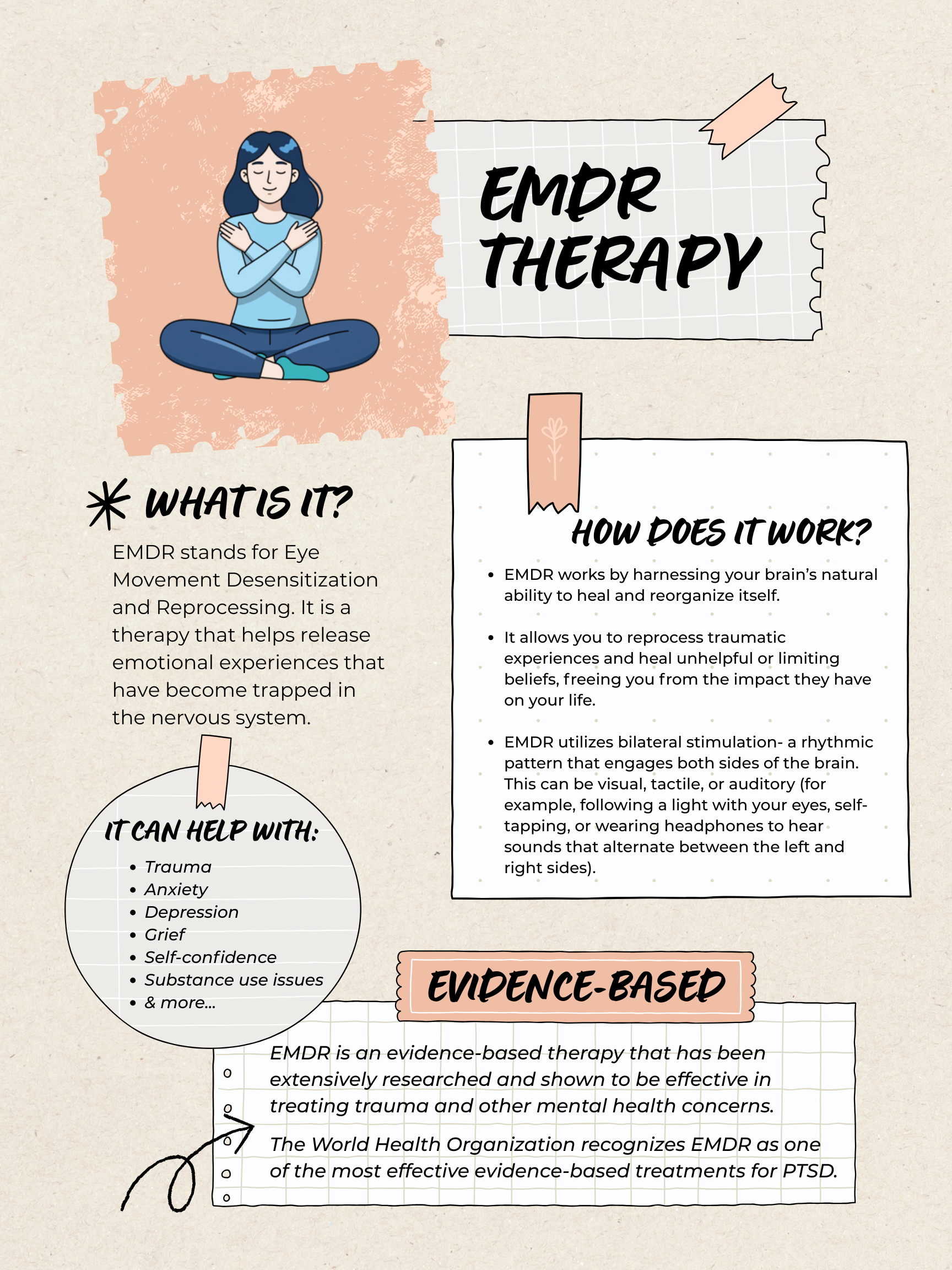
Many of my clients struggling with addiction have found EMDR to be a powerful tool to help reduce urges and cravings, and to address the issues underlying the addiction.
EMDR is also one of the most evidence-based therapies for trauma.
It is helpful in overcoming limiting beliefs, including those that can affect our self-esteem and sense of self-worth.
The 8 Phases of EMDR:
EMDR uses a structured approach to help shift how a memory is stored in the mind and body. This process is divided into eight distinct phases, guiding us from history taking and treatment planning through to reprocessing and healing.
PHASE 1: History Taking and Treatment Planning
We’ll explore your history, identify the experiences you’d like to work on, and create a treatment plan that aligns with your needs and goals.
PHASE 2: Preparation
We’ll go over the EMDR process, answer your questions, and develop tools to help you feel grounded and supported throughout the work.
PHASE 3: Assessment
We’ll identify a specific memory to focus on, along with the thoughts, emotions, body sensations, and beliefs connected to it.
PHASE 4: Desensitization
We’ll work with the memory while using bilateral stimulation to reduce its emotional intensity and support the processing of the experience.
PHASE 5: Installation
We’ll strengthen a more positive and supportive belief about yourself while using bilateral stimulation to reinforce this new perspective.
PHASE 6: Body Scan
We’ll notice any remaining physical sensations connected to the memory and continue processing anything that still feels unresolved.
PHASE 7: Closure
We’ll bring the session to a place of stability and calm, ensuring you have tools to support yourself between sessions.
PHASE 8: Reevaluation
We’ll review what has shifted, assess your progress, and identify any areas that may need further attention.
LENGTH OF TREATMENT
EMDR is considered to be a shorter term therapy than some other modalities. This means many people experience relief from their symptoms more quickly.
How long it takes to complete treatment depends on a number of factors, such as the number and complexity of issues being processed, how long difficulties have been present, current life circumstances, and emotional readiness.
Together, we’ll regularly check in on your progress and adjust the pace of treatment based on your needs and goals.
EMDR can be done online or in person. It can also be done through regular 60 minute sessions, extended 90 minute sessions, or more intensive 2 to 4 hour sessions.
Want to know more? Book a FREE 15 minute phone consultation to find out if EMDR might be a good fit for you.
EMDR in a nutshell: